M2 Money Supply and Bitcoin: Is There Really a Correlation?
One of the most frequently cited macro arguments for Bitcoin is its relationship to M2 money supply. The argument goes like this: when central banks expand the money supply — printing money to fund stimulus, quantitative easing, or debt monetization — the purchasing power of that currency declines. Bitcoin, with its fixed supply, acts as a hedge against this monetary debasement.
The data shows something interesting: this relationship is real, but messier than Bitcoin maximalists typically acknowledge.
What Is M2?
M2 is a measure of the money supply that includes cash, checking deposits, savings accounts, money market funds, and other highly liquid assets. It is published monthly by the Federal Reserve and is one of the most-watched indicators of monetary policy stance.
When the Fed engages in quantitative easing — buying bonds and mortgage-backed securities — new reserves are created in the banking system, which expands M2. When the Fed raises interest rates and reduces its balance sheet (quantitative tightening), M2 growth slows or contracts.
The Pandemic Money Printing and Bitcoin
The most dramatic recent case study is the COVID-19 pandemic. From early 2020 to early 2022, the US M2 money supply grew from approximately $15 trillion to over $21 trillion — an expansion of roughly 40% in just two years. This was the largest peacetime monetary expansion in US history.
Over roughly the same period, Bitcoin went from $7,000 to $69,000 — a 10x increase. The correlation appeared extraordinarily tight, leading many to conclude that Bitcoin was simply pricing in monetary debasement.
But then something interesting happened. The Fed began aggressively raising interest rates in 2022, and M2 actually contracted — something that had not happened since the Great Depression. Bitcoin’s price fell from $69,000 to $15,500. The correlation held, but in the opposite direction.
Where the Correlation Breaks Down
The problem with the M2-Bitcoin narrative is that it works best in hindsight. Several periods exist where Bitcoin moved dramatically without corresponding M2 changes — and vice versa.
The 2017 bull run occurred during a period of only modest M2 growth. The collapse of FTX in November 2022 drove Bitcoin dramatically lower regardless of monetary conditions. And regulatory events — ETF approvals, exchange hacks, government seizures — have driven Bitcoin price moves completely disconnected from any monetary variable.
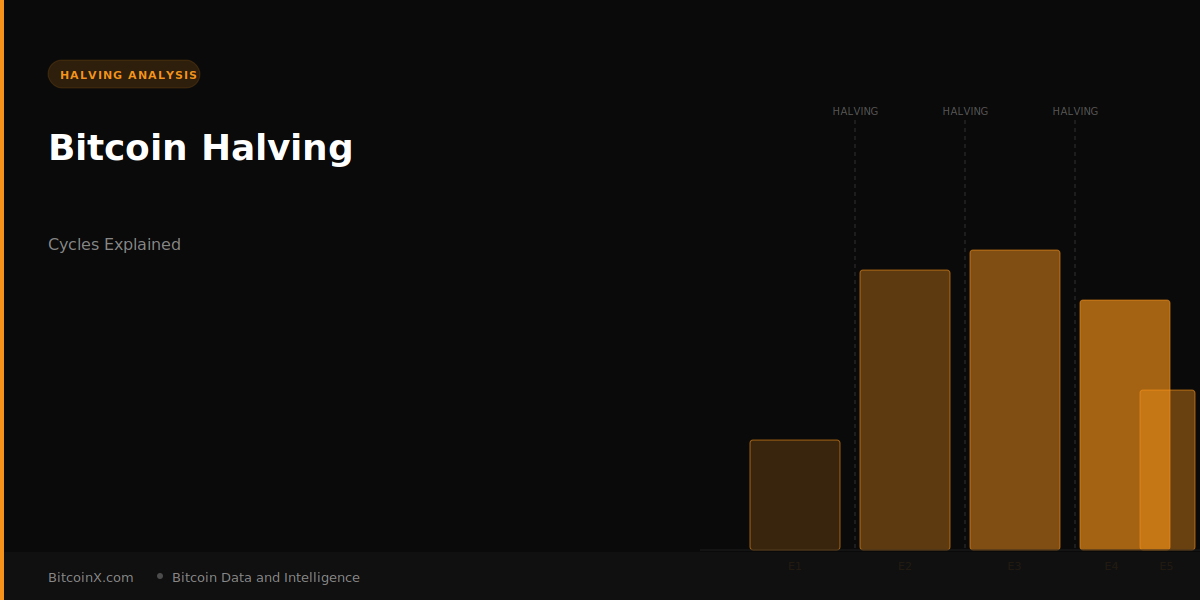
More fundamentally, Bitcoin’s price is also heavily influenced by its own four-year halving cycle, which has nothing to do with M2 or monetary policy. The interaction between the halving cycle and the macro monetary cycle is one of the most complex dynamics in crypto markets.
Our Data
We track M2 money supply monthly from FRED (Federal Reserve Economic Data) alongside Bitcoin’s daily price. The data confirms a broadly positive correlation over multi-year periods — but investors who tried to use M2 as a short-term timing signal would have had mixed results.
The most useful way to use M2 data is as context, not as a trading signal. Is monetary policy expanding or contracting? Is M2 growth accelerating or decelerating? These questions help frame the macro environment in which Bitcoin is operating.